Grotte dei monaci
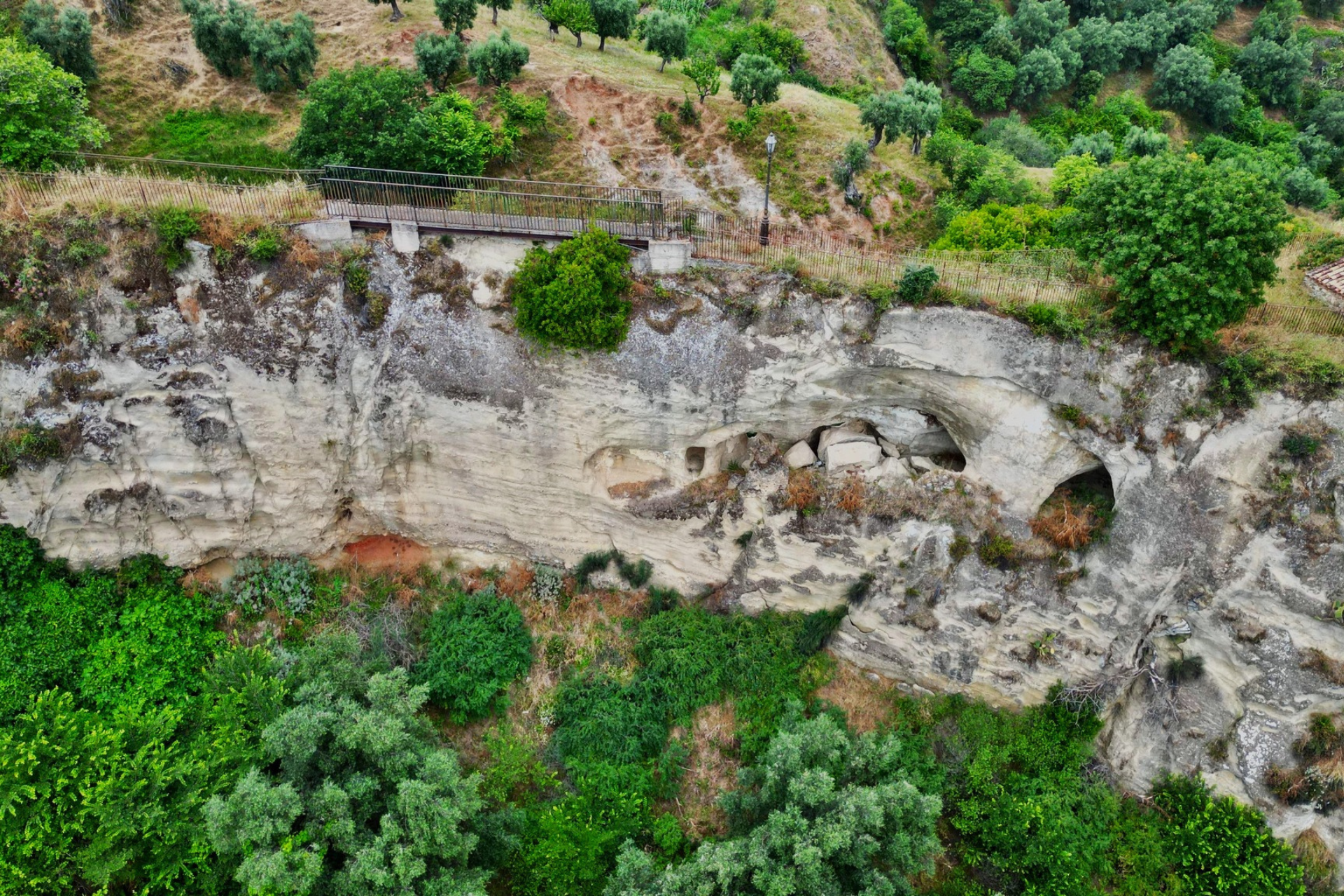
The Caloveto area displays a veritable work of open-air tunneling, carved into the soft tuff rock that houses the respective settlements. These caves, hundreds and hundreds of years old, have provided shelter to exiles, ascetics, anchorites, hermits, and saints, but also, in more recent times, to displaced persons and bandits.
These artificial caves were dug starting in the 7th and 8th centuries by patient Calabrian-Greek monks, known as "Basilians," who, fleeing the territories of the Byzantine Empire, excavated them to build shelters, churches, and monasteries. Using this technique, they created the important settlement of the monastery of San Giovanni Calibita, which gave the town its name. The caves of San Giovanni Calibita are intimately linked to the genesis of Caloveto, as a cluster of houses arose around this first series of caves, which over time provided shelter to a small farming community, laying the foundations of what would later become modern-day Caloveto.
Interesting Facts
The local name refers to "Calibyta/Calibita": the Greek saint after whom the cave monastery is named, which "gave its name" and origin to the town.
The caves are part of the network of Basilian hermitages dotting Calabria, a testament to the encounter between Eastern spirituality and the rocky landscape.